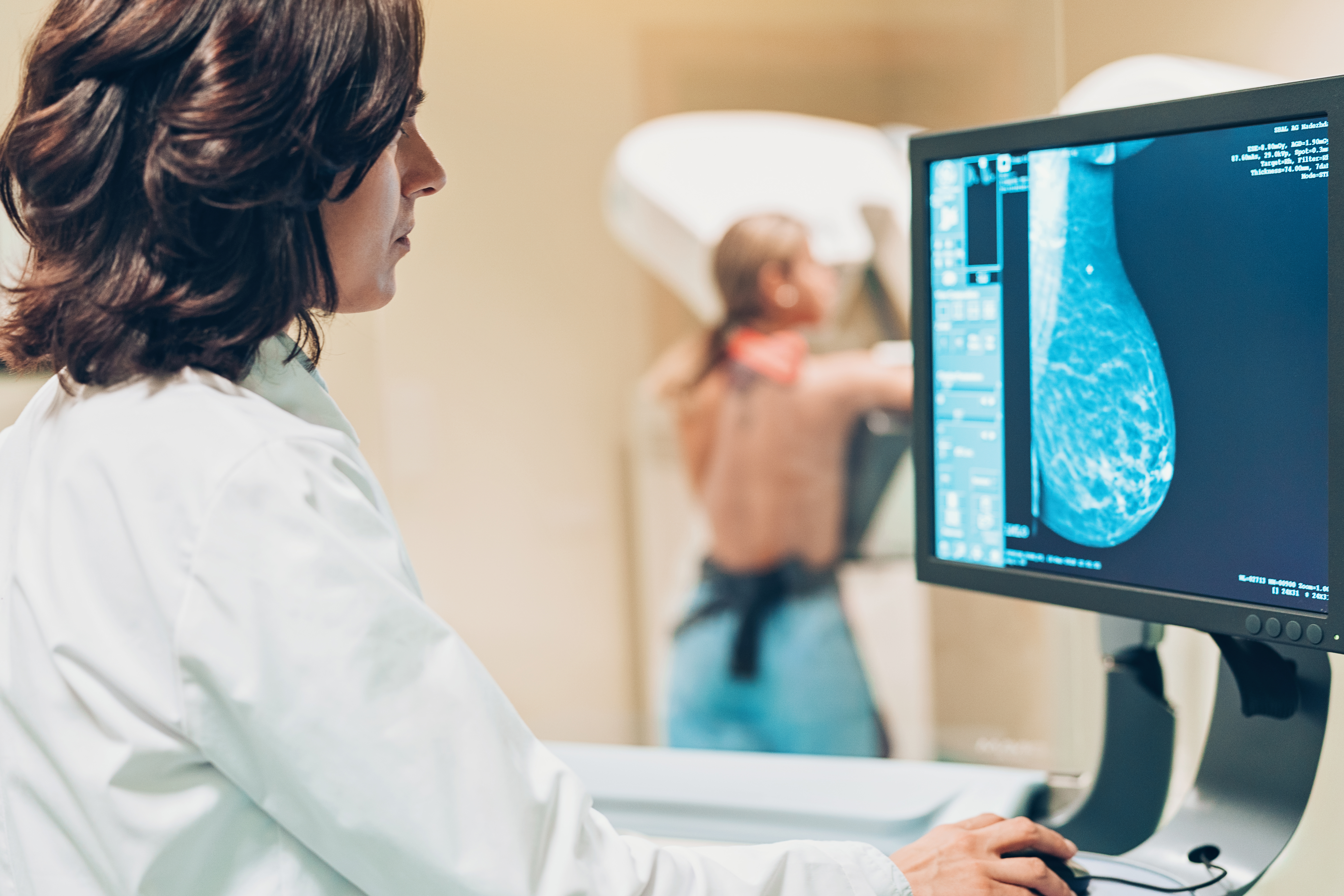
Oncoplastic breast surgery combines a lumpectomy or partial mastectomy with plastic-surgery techniques to reshape the breast. The breast surgeon removes the cancer and the necessary margin of surrounding tissue, and the plastic surgeon rearranges or reconstructs the remaining tissue to help preserve the breast’s shape.
This is a breast-conserving approach, but cancer treatment always comes first. The breast cancer team determines whether a lumpectomy is medically appropriate and how much tissue must be removed. The reconstructive plan is then designed around that operation.
Why Timing and Team Coordination Matter
Whenever possible, a patient should ask about oncoplastic options before the lumpectomy. Early planning allows the surgeons to coordinate incision placement, the location and anticipated volume of the cancer removal, breast reshaping and any procedure proposed for the opposite breast.
The care team may include a breast surgeon, plastic surgeon, medical oncologist, pathologist, radiologist, geneticist, and radiation oncologist. Each specialist has a different role. The team must also consider whether additional cancer surgery could be required if pathology shows that more tissue needs to be removed.
Techniques That May Be Considered
The method depends on breast size and shape, tumor location, the expected amount of tissue removal, prior surgery, anticipated radiation and the patient’s goals. The plan may include:
- Rearranging nearby breast tissue to fill and support the lumpectomy area
- Reshaping the treated breast using breast-lift techniques
- Combining the lumpectomy with a breast reduction when a reduction is appropriate
- Repositioning the nipple and areola as part of the breast reshaping
- Using tissue from an adjacent area in selected cases
- Performing a lift or reduction on the opposite breast to improve balance
Not every patient needs an operation on the opposite breast, and symmetry cannot be guaranteed. Natural breasts are not perfectly identical, and surgery, healing and radiation may affect the two sides differently.
Who May Be Evaluated?
An oncoplastic consultation may be helpful for a patient who is medically eligible for breast-conserving surgery and is concerned about how the size or location of the planned lumpectomy may affect breast shape. It may be especially relevant when a relatively large amount of tissue is expected to be removed, the tumor is in a cosmetically sensitive location, the breasts are large or drooping, or a breast reduction or lift is already desired.
Oncoplastic surgery is not appropriate for every cancer diagnosis or every breast. Some patients are better served by a standard lumpectomy, mastectomy with reconstruction or another oncologically appropriate plan. The decision must be individualized by the treating team.
A patient who already has an indentation, tightness, asymmetry or other breast contour change after lumpectomy and radiation may still request an evaluation. Options can differ from those available at the time of cancer surgery because radiation and scar tissue may affect circulation, tissue flexibility and healing.
Revision may involve scar release, fat grafting, breast reshaping, a lift or reduction, a balancing procedure on the opposite breast or another reconstructive method. More than one stage may be needed, and complete correction may not be possible.
Radiation and the Reconstructed Breast
Many patients who undergo breast-conserving surgery also receive radiation. Radiation can affect breast size, firmness, skin quality, color and shape over time. For that reason, the reconstruction that looks balanced immediately after surgery may change during or after treatment.
The anticipated radiation plan should be discussed before surgery whenever possible. Follow-up continues with the oncology team regardless of the reconstructive approach.
Recovery and Follow-Up
Recovery depends on the extent of the lumpectomy, the reconstruction performed, whether the opposite breast is treated and the patient’s overall health. Swelling, bruising, soreness, tightness and temporary changes in sensation can occur. Incisions and activity restrictions vary with the technique.
Patients receive instructions for incision care, support garments, medications, activity and follow-up. Cancer-related pathology, additional treatment and surveillance remain under the direction of the oncology team.
Risks and Realistic Expectations
Potential risks include bleeding, infection, fluid collection, delayed wound healing, fat necrosis, breast or nipple sensation changes, asymmetry, contour irregularity, unfavorable scarring, partial or complete loss of nipple or skin tissue, blood clots and anesthesia complications. Additional surgery may be required for a positive margin, a complication or a later revision.
Oncoplastic surgery may help preserve or restore breast shape, but it cannot guarantee a particular appearance or perfect symmetry. Cancer treatment, radiation, aging, weight changes and individual healing can all affect the long-term result.
Requesting a Coordinated Consultation
Patients considering oncoplastic surgery should bring available imaging, biopsy information and the names of their oncology specialists. With permission, Northern Center for Plastic Surgery can coordinate with the treating breast-surgery and oncology teams to determine whether reconstructive planning can be incorporated into the patient’s care.